
~ The Redefined Life ~ June 22, 2026
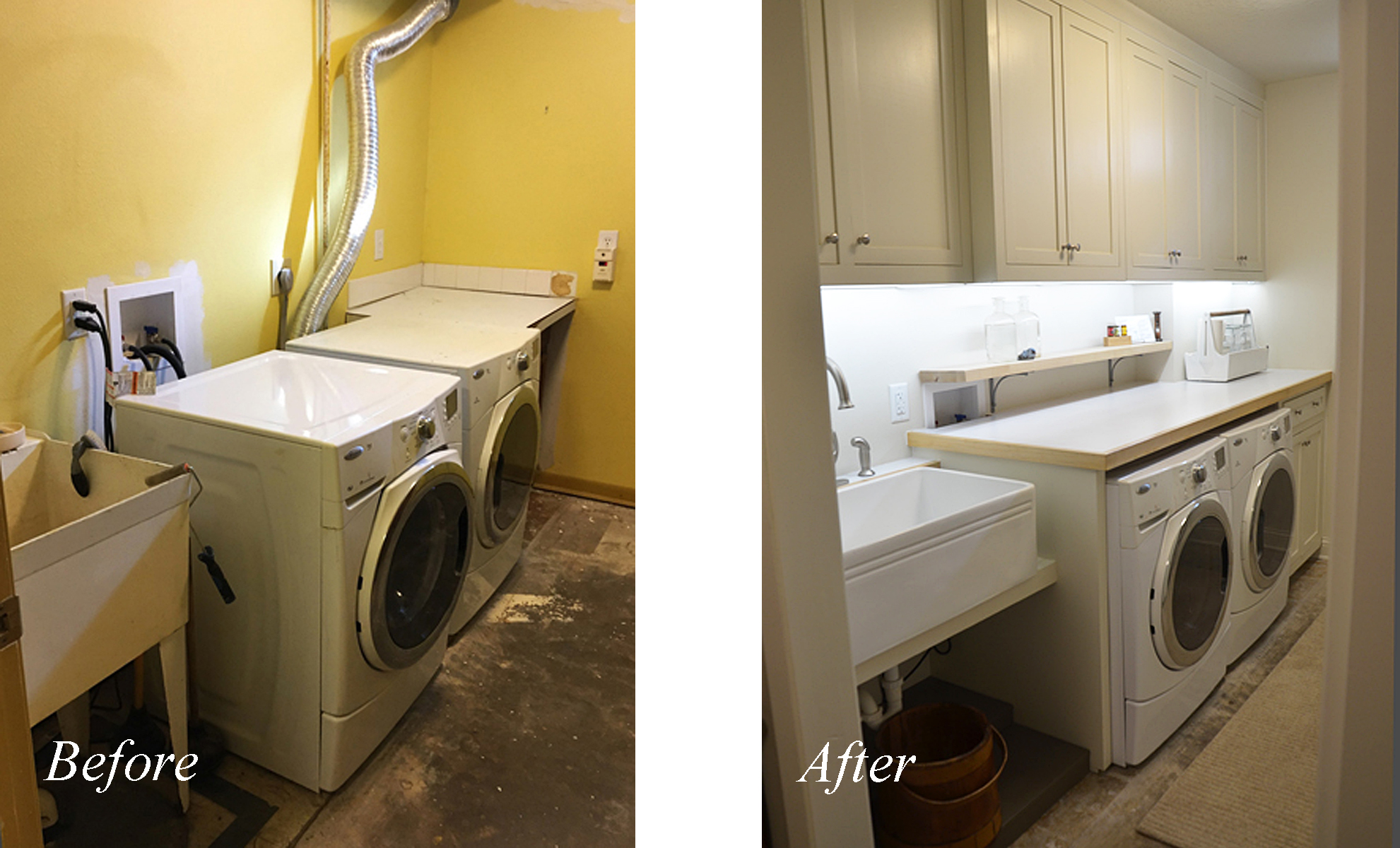
Let’s face it—laundry is rarely anyone’s favorite chore, including mine. When the space where it happens feels dark, cluttered, and uninviting, even a simple load of towels can feel like a burden. For years, that described my basement laundry room. Inherited from the previous homeowners, the space was functional but far from inspiring. This makeover gave me the opportunity to reimagine it from the ground up, transforming it into a room that is brighter, more organized, and genuinely enjoyable to use.
More importantly, this project highlights something many homeowners overlook: our surroundings have a profound impact on our mindset and how we feel. The design, organization, color palette, and functionality of a space can influence our energy, productivity, and overall sense of well-being. When a room feels chaotic, everyday tasks can seem more demanding. When it feels calm, organized, and thoughtfully designed, those same tasks become easier to manage—and even enjoyable. This laundry room transformation is a reminder that good design isn’t just about aesthetics; it’s about creating spaces that support the way we live.
THE BEFORE: Functional but Far from Inspiring
The original laundry room checked the basic box of functionality, but little else. Exposed ductwork, plumbing, and wiring immediately drew attention to its unfinished nature, while the color palette competed for attention as well. The intense lemon-yellow walls with mustard-colored trim dominated the small room and my senses, creating a visual heaviness that made the space feel dated, overwhelming, and even a bit sickening.
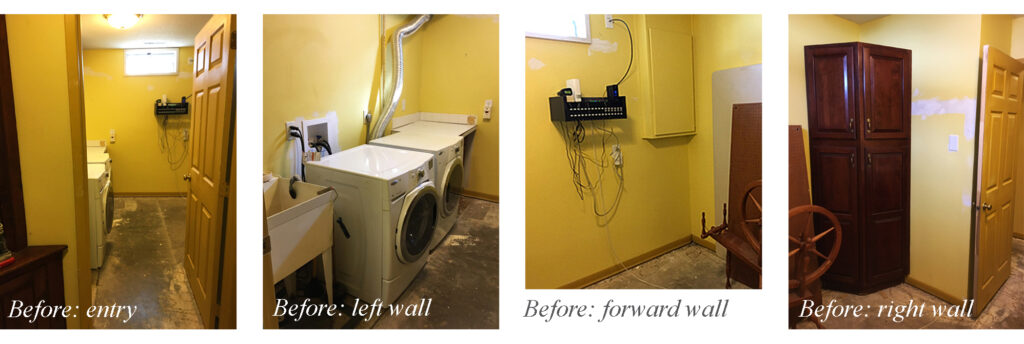
For such a tiny room, it had a remarkable ability to drain everything: the washer, my energy, and occasionally my will to fold another towel. (photo credit: The Redefined Home llc)
Storage was another major challenge. A single base cabinet provided the only enclosed usable storage, leaving cleaning supplies and laundry essentials with few places to go. Counter space was nonexistent, making it difficult to sort clothes, fold laundry, or organize household tasks.
The room also had a discolored plastic utility sink that had seen better days. While technically functional, it lacked the width and cleanliness needed for soaking stained garments or handling larger household projects. Despite regular cleaning, the room always seemed to look and feel dirty—a frustrating reality that, as homeowners, many of us know all too well.
And that perception matters.
When a room appears cluttered, worn, or unfinished, it can subtly affect our attitude toward the tasks performed there. Chores begin to feel more burdensome. Time spent in the room feels longer. The space becomes one we hurry through rather than one we can comfortably work in.
In short, the laundry room functioned as intended, but it did little to support a positive experience.
THE VISION: Better Function, Better Storage, Better Experience
The renovation goal was about more than aesthetics. It was about creating a space that worked with me rather than against me.
Research consistently shows that organized environments can reduce stress and improve focus. When everything has a designated place, the brain spends less energy processing visual clutter and more energy on the task at hand. The objective here was to maximize every inch of available space, improve workflow, and create an environment that felt clean, calm, and purposeful.
Rather than treating the laundry room as an afterthought, the redesign recognized it as a hardworking space that deserved the same level of attention as any other room in the home.
THE AFTER: A Laundry Room That Works Hard and Feels Good
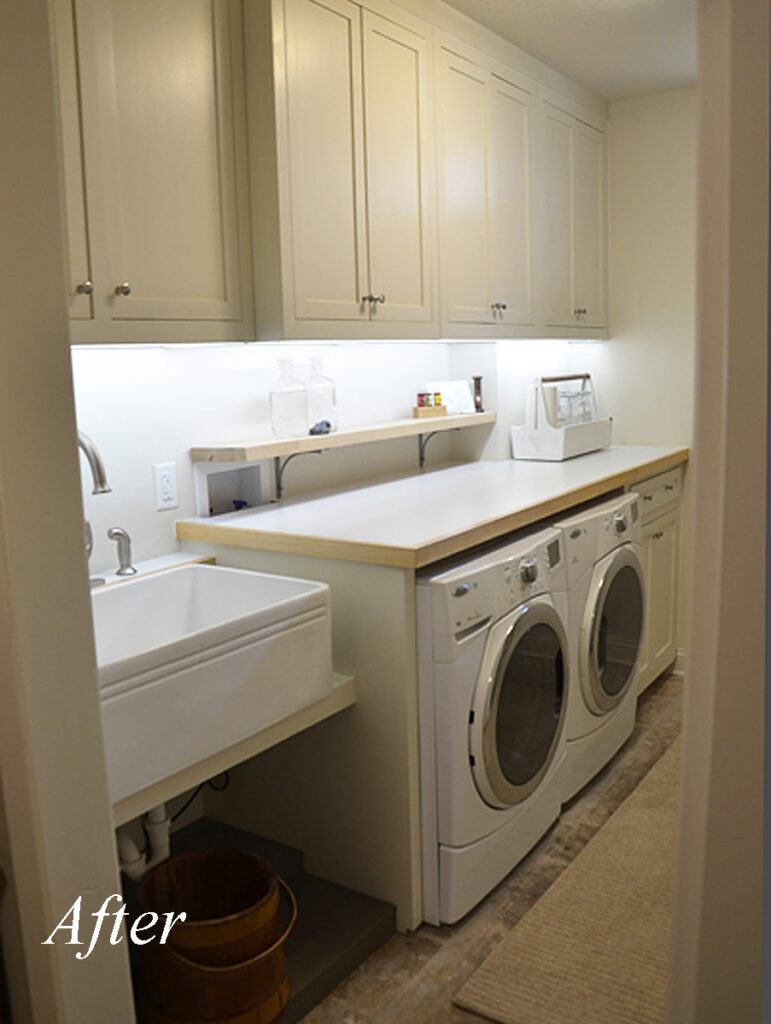
The transformation begins with one of the most impactful upgrades: utilizing the full vertical height of the walls. Storage capacity increased dramatically while creating a cleaner, more finished appearance.
(photo credit: The Redefined Home llc)
Suddenly, detergents, cleaning supplies, seasonal items, and household essentials all had designated homes. Visual clutter disappeared, and with it came a greater sense of order and control.
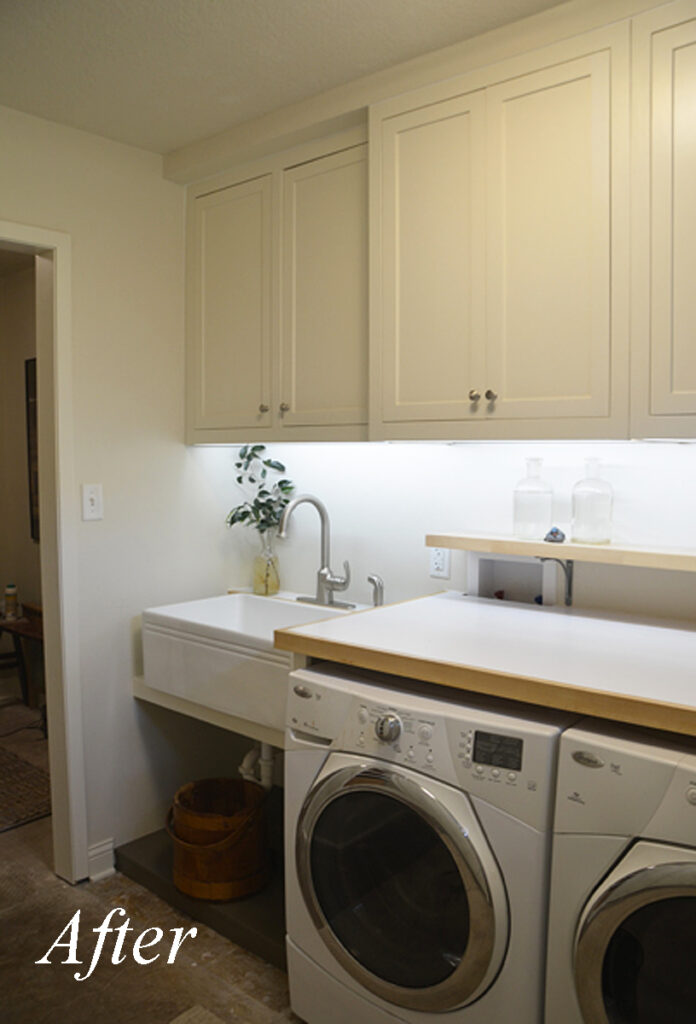
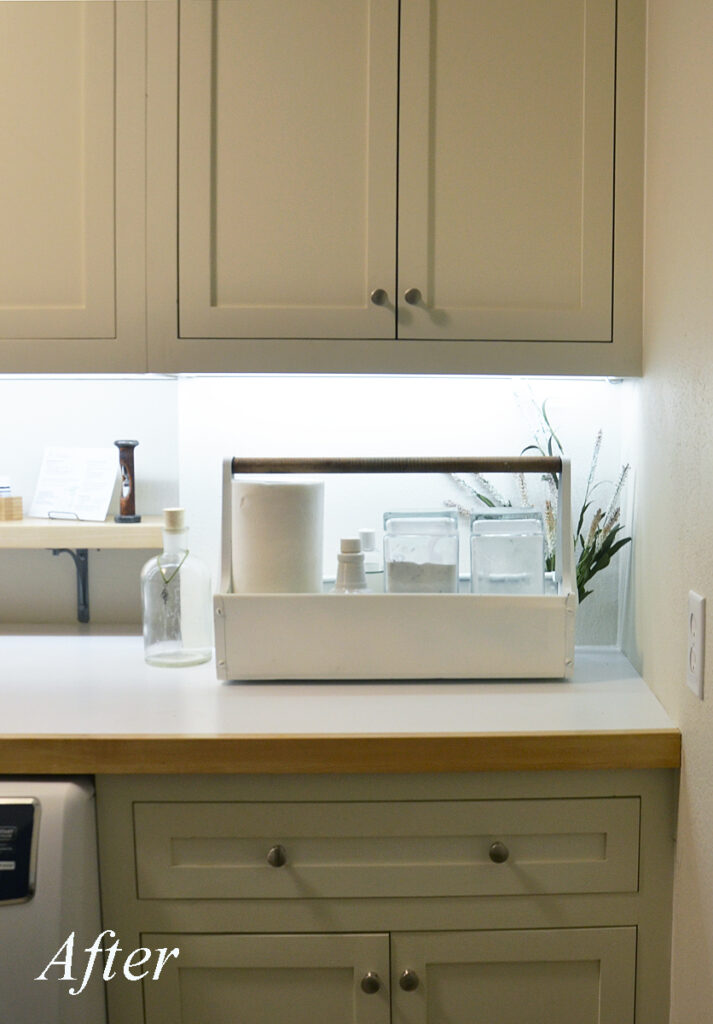
A custom countertop spanning the washer, dryer, and new base cabinet introduced a generous work surface for folding clothes, sorting laundry, and organizing supplies. It created an inviting anchor to the upper cabinets and the spotlight for the under-cabinet lighting. The new layout transformed previously wasted space into a highly functional workstation.
The outdated utility sink was replaced with a deep porcelain soaking sink that is as practical as it is attractive. Whether treating stubborn stains, hand-washing delicate items, or tackling messy cleanup projects, the new sink makes tasks easier and more efficient, and it is easy to keep clean. The space below the sink needed to be left open to access the sump pump; the solution was to conceal the sump pump well with an elevated riser, which provided the perfect place for a charming old wooden bucket to become a new trash container.
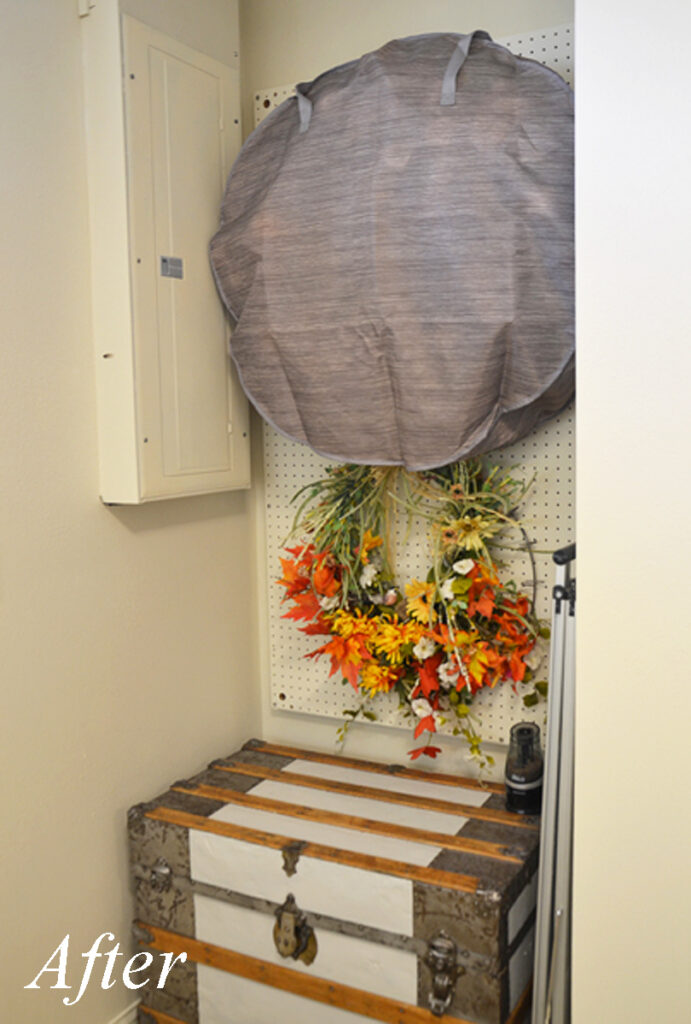
The next design challenge was the electrical panel located in the far-right corner of the room. While it remained a necessary functional element, I wanted it to feel more integrated into the overall design rather than stand out as an eyesore. Building code requires a minimum three-foot clearance in front of electrical panels for service access, so any solution needed to be both practical and compliant.
The answer was a custom pegboard designed to store awkward seasonal wreaths while remaining easy to remove when access to the panel is needed. To visually anchor the area, I placed a restored trunk on casters beneath it, adding both character and flexibility. Together, these simple additions transformed an overlooked corner into an attractive and hardworking feature while maintaining full access to the electrical panel.
(photo credit: The Redefined Home llc)
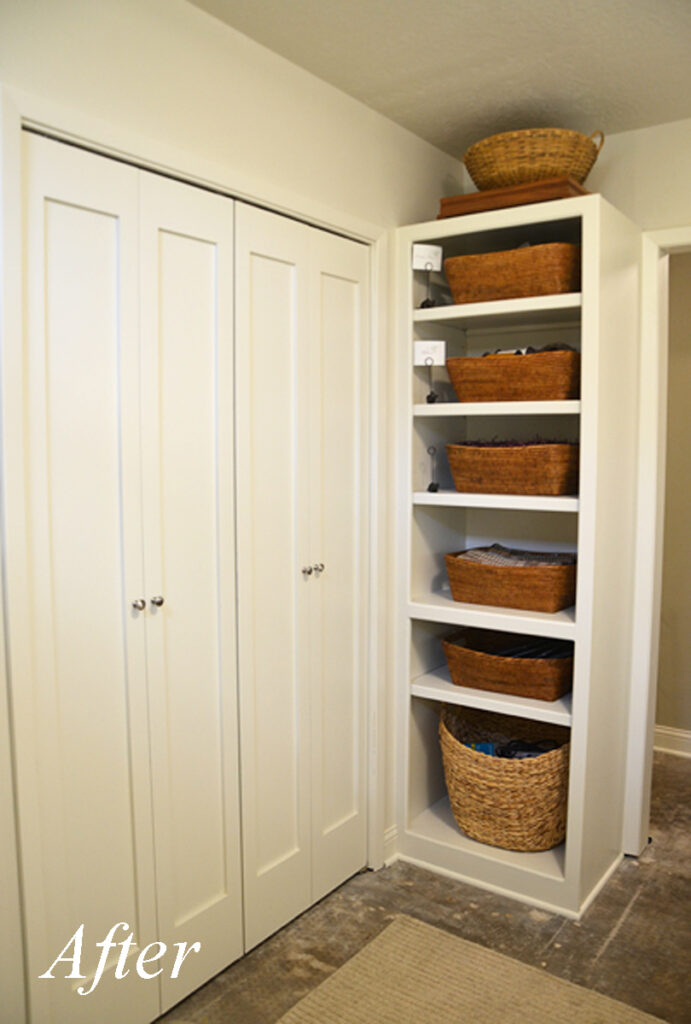
As we move through this small room, the wall opposite the washer and dryer presented another opportunity to maximize floor-to-ceiling storage. Originally, this area was occupied by a closet that opened into the hallway just outside the laundry room. Removing it reclaimed valuable square footage within the room’s limited footprint and created an opportunity for a more efficient storage solution.
Bi-fold closets were added to provide generous, easily accessible storage while maintaining a streamlined appearance and requiring minimal floor space. The adjacent open shelving keeps everyday storage baskets organized and within easy reach. The shelving unit itself was repurposed from a bedroom, giving it a second life while adding both charm and practicality to the space. Every element was thoughtfully chosen to balance functionality, storage, and visual harmony
(photo credit: The Redefined Home llc)
The result is a room that feels brighter, cleaner, and intentionally designed while its function multiplied threefold. Win-Win-Win!
Even with all these great transitions, perhaps the most significant change isn’t something you can measure in square footage or storage capacity.
It’s how the room makes you feel.
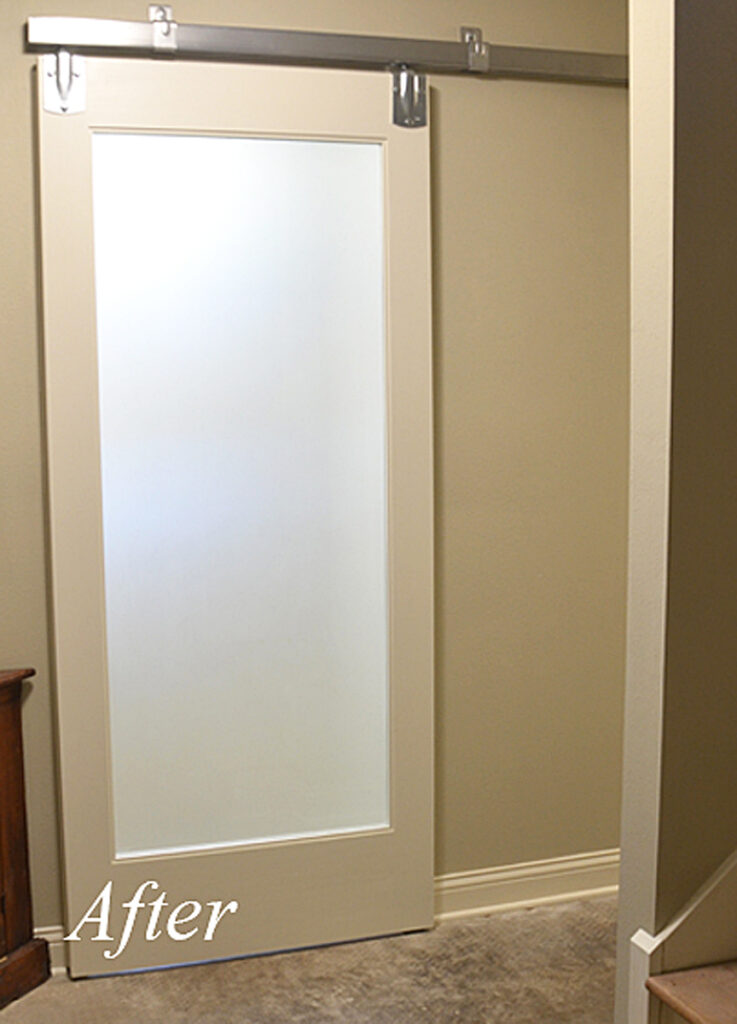
We’ve now made a full circle around the room, but what about the journey into it? The entry door was another transforming change. The original solid, mustard-colored door darkened the hallway and made the laundry room feel uninviting before you even stepped inside. When the hallway closet was removed, an opportunity emerged to replace it with a frosted glass door. The change was simple, but the impact was remarkable. Now the morning sun streams through the laundry room window and brightens what was once a gloomy basement hallway. It’s proof that even the smallest design decisions can completely transform the way a space feels.
(photo credit: The Redefined Home llc)
The Hidden Power of Good Design
Most people don’t think about the psychological impact of a laundry room, yet our surroundings influence us every day.
A cluttered, poorly organized space can create low-level stress and mental fatigue. Even if we’re not consciously aware of it, our brains are constantly processing the environment around us. Visual disorder can make routine tasks feel more overwhelming and sap motivation before we even begin.
Conversely, a well-designed space can foster a sense of calm, competence, and productivity. Clean lines, adequate storage, functional work surfaces, and thoughtful organization reduce friction in daily routines.
Tasks become easier to start and easier to complete.
Even the decorative details play a role. Because a laundry room is such a hardworking space, it’s best to keep accents simple and intentional. A few meaningful touches—a favorite piece of art, a vintage find, or a carefully chosen accessory—can elevate the mood of the room and bring a sense of enjoyment to otherwise mundane tasks.
The difference is subtle but powerful.
(photo credit: The Redefined Home llc)
Instead of dreading laundry day, I now approach it with a positive mindset. Instead of rushing through the room, I can work comfortably and efficiently. The space supports my routine rather than creating obstacles.
When a room functions beautifully, it conserves mental energy. And when we spend less energy fighting our environment, we have more energy available for the things that matter most.
(photo credit: The Redefined Home llc)
More Than a Makeover
This makeover demonstrates that even the most utilitarian spaces deserve thoughtful design. A laundry room may never be the centerpiece of a home, but it is a room that gets used week after week, year after year.
By improving storage, workflow, organization, and aesthetics, this makeover transformed more than the appearance of the room—it transformed the experience of using it.
What was once a space that felt perpetually dirty and uninspiring is now bright, organized, and welcoming. It’s proof that good design isn’t just about how a room looks. It’s about how a room makes you feel.
And sometimes, revitalizing a space can make even laundry day a little more enjoyable.
Every home has spaces that quietly shape our daily lives. When those spaces are designed with intention, even the simplest routines can become more enjoyable. If you’re wondering what untapped potential exists in your own home, I’d be delighted to start that conversation.
Leave A Comment