~ The Redefined Life ~ December 8, 2025
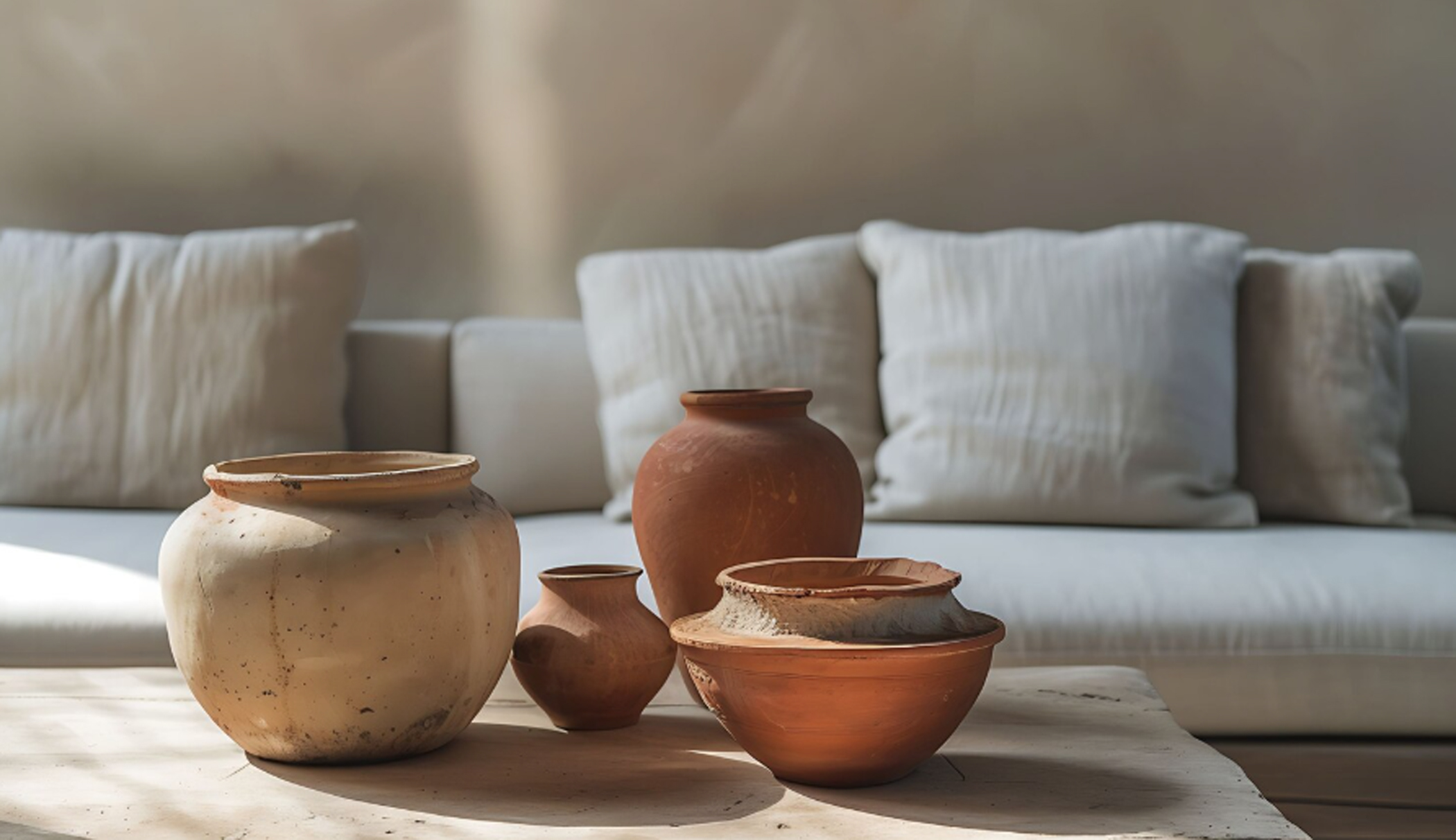
As 2026 approaches, I thought it’d be fun to reveal some of the major shifts happening in home décor — from sterile minimalism, stark whites, and cool grays to spaces that feel warm, emotional, textured, and distinctly personal. That’s exciting, but also worth pausing over: some of the “hot” trends are speculated to fade quickly, feel overly stylized, look cluttered, or lack practicality. Others will fill us with delight and become part of the family.
This is the first of three articles on shifting trends in home design. If you’re planning a home makeover soon, make sure to read all three articles before investing in major makeovers, or click here to contact me for personal guidance. There are many factors to consider before going “all in” with some of the new trends. (Hint: The articles that are coming soon are: Timeless yet Trendy Décor for 2026: Part 2, and Why Some 2026 Trends Might Not be Right for You: Part 3.)
Let’s Dive into the Home Design Trends Expected to Shape 2026
Natural Materials, Mixed Woods & Texture-First Spaces
- There’s a strong push toward natural woods, stone, plaster, rattan, and other tactile materials — replacing cold metals, glossy finishes, or synthetic surfaces.
- Designers are embracing mixed wood tones — e.g., pairing light oak with walnut or warm wood with dark-stained accents — offering depth and richness without matchy-matchy uniformity.
- The overall vibe: spaces that feel “lived in,” grounded, and organic rather than sleek, sterile, or showroom-perfect.
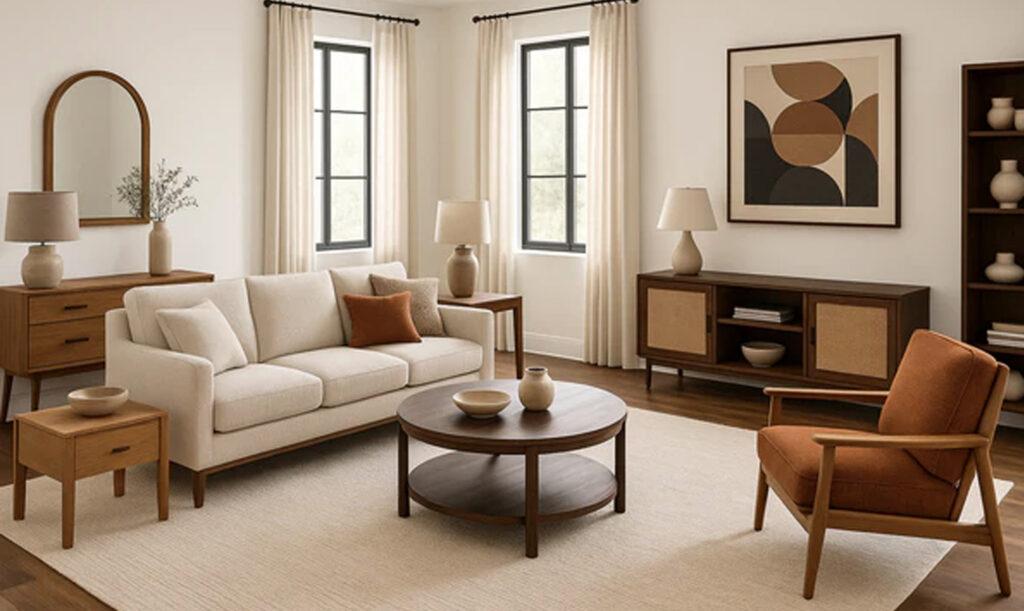
Mixed woods and an earthy palette help warm up a room. The eclectic furniture adds another layer of interest and creates a relaxed personal charm. (credit: https://simplicityhomeliving.com/blogs)
Curves, Soft Shapes & Sculptural Furniture
- Rigid, rectilinear furniture continues to fade — 2026 favors rounded, curved, or sculptural silhouettes: arched mirrors, curved sofas, soft-edge tables, even curved banquettes.
- These shapes can soften a room’s energy, make spaces feel more welcoming, and some may actually fit better in smaller or irregular rooms, while others may take up more space than the room can tolerate. It’s a balancing act, but when it comes together, it can be refreshing.
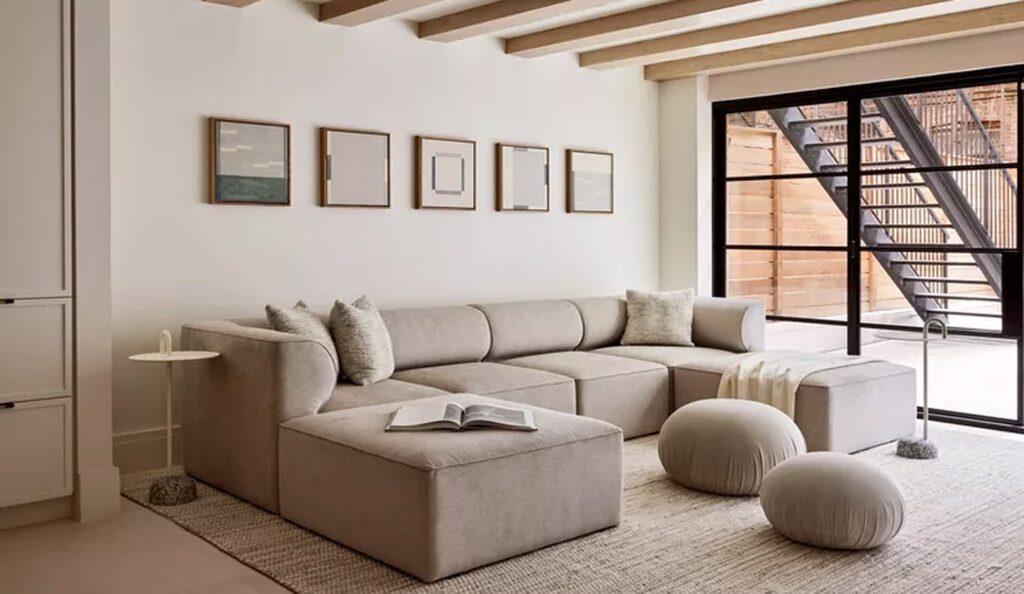
Soft shapes and organic lines are taking the edge off the past hard-edged design style, making a friendly invitation to relax. The edges and back sections of this sectional have been softened, even though its overall shape is geometric. Then, the poufs layer more softness to the space. Subtle details make it easy to update existing spaces. (credit: thespruce.com; design by Chango & Co.; photo by Nicole Franzen)
Color Drenching & Earthy / Rich Palettes
- Gone (mostly) are stark whites and uniform neutrals. Instead: earth tones, warm neutrals, ochre, clay, olive, rust, mushroom, soft taupes, deep greens, plums, and jewel tones that create warmth and depth.
- The new trend is moving toward “color drenching”, which is extending a single color across walls, trim, ceiling (and maybe even furniture) to create immersive, moody spaces.
- Accent pieces or full rooms in rich, saturated hues or deep, earthy tones are appealing to those who want personality beyond stark minimalism.
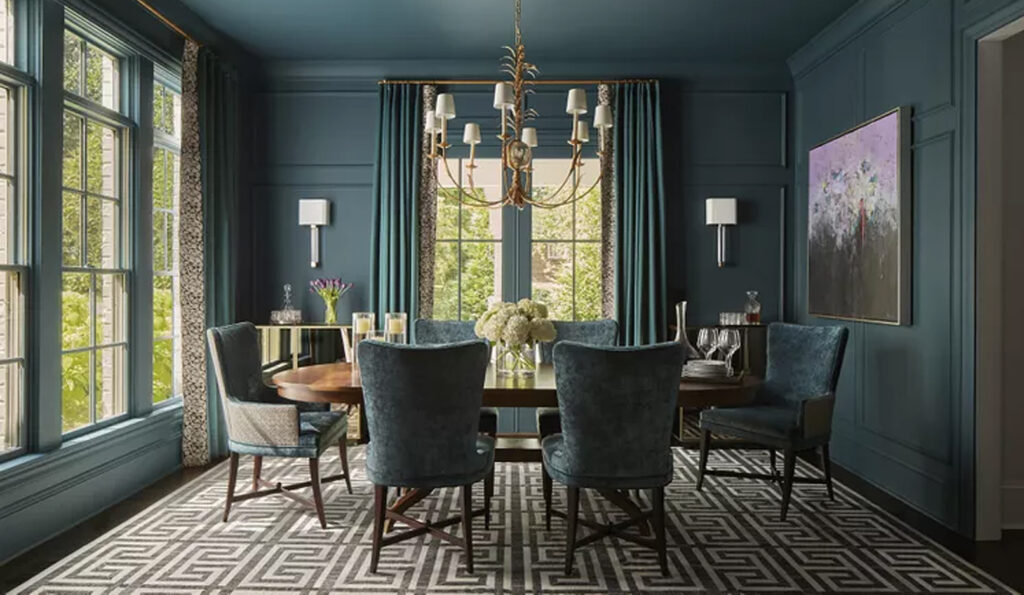
Color drenching in saturated hues needs careful planning; it can definitely affect your senses, and that can either work for you or against you. Ask yourself what specific mood you are trying to create. (credit: MarthaStewart.com; Zeke Ruelas / Brad Ramsey Interiors)
Bold Material Statements — Stone, Marble & Statement Floors / Walls
- Expect to see dramatic stone — marble with bold veining, raw-edge slabs, and natural stone wall treatments — used more boldly: beyond countertops to backsplashes, accent walls, even furniture pieces.
- Floors and ceilings are getting attention too: think patterned or checkerboard floors, layered area rugs, wallpapered ceilings — a departure from conventional floors and plain ceilings.
- There’s also a resurgence of vintage or retro touches (e.g., classic lighting, furniture silhouettes, or historic-style trim and molding), giving homes a sense of character and history layered with modern updates.
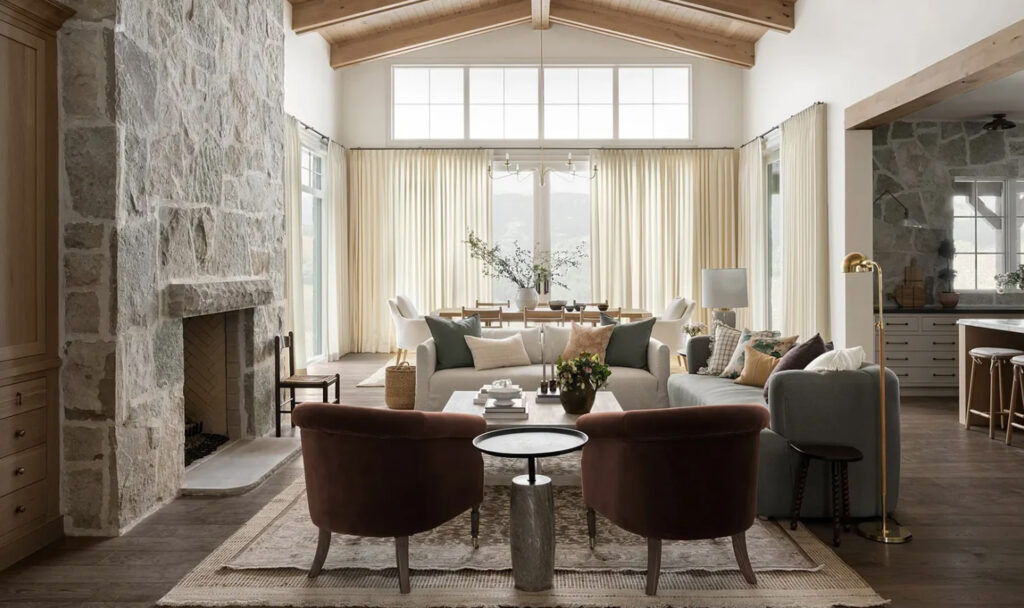
This example makes a bold statement with tasteful textural stone accent walls in the living area and kitchen. The layered area rugs add an unexpected charm to anchor the conversation area. (credit: canadianloghome.com)
Maximalism, Personalization & “Homes That Feel Lived-In”
- The pendulum is swinging away from cold minimalism to maximalism with intention — bold patterns, layered textiles, gallery-style walls mixing art and vintage finds, and personal touches (books, art, memories).
- People want homes that feel like them: not sterile showrooms. That means more texture, warmth, layered surfaces, and human-scale imperfections — a design philosophy that is embracing the imperfect, the handmade, and the cozy.
- Defined zones rather than open-plan perfection: think cozy reading nooks, intimate lounges, and purposeful built-ins — spaces for living, relaxing, and gathering.
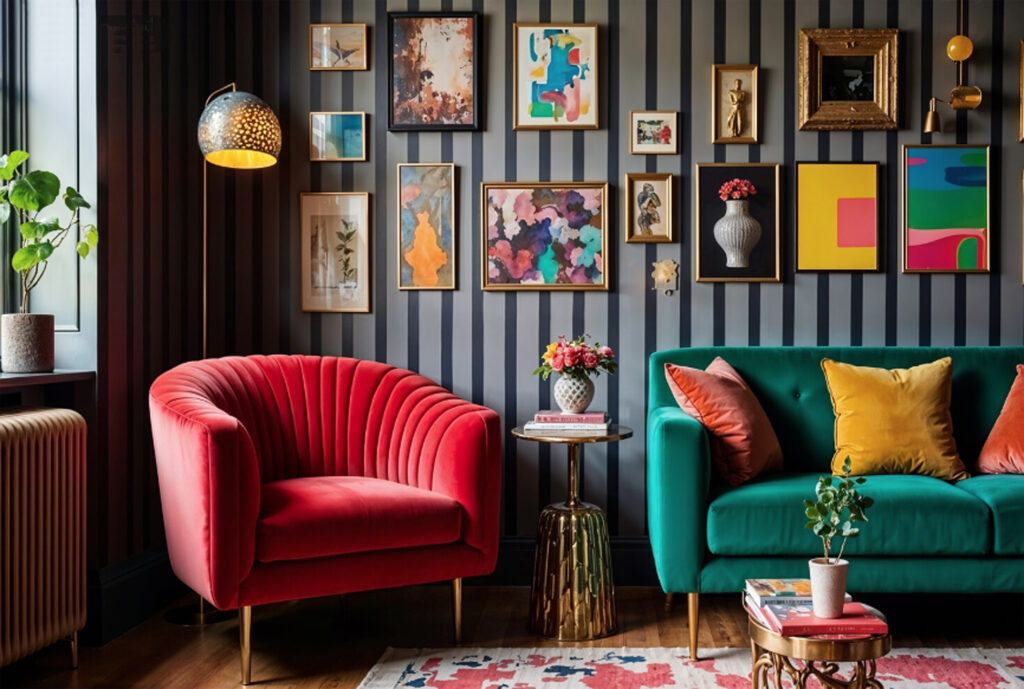
There’s a fine line between cluttered chaos and maximalism. This trend can overwhelm a room and our senses, but if you desire to fill your space with eclectic layers, it can be introduced in ways that reflect your personality while creating an interesting focal point without overwhelming you.
Is your creativity spinning new ideas?
I know my creativity certainly loves the possibilities. 2026’s emerging decor trends lean into warmth, personality, and a return to tangible, human-centered aesthetics. Some of these trends are offering exciting opportunities to make your home feel rich, layered, and soulful; others can be expensive mistakes— after all, most trends come with trade-offs. Before diving “all in”, read the next two articles in this series, coming soon, or click here to contact me for immediate personal guidance about how to introduce the new trends in ways that reflect your personality and lifestyle, and not turn your makeover into an awkward feeling, fleeting fashion.
Leave A Comment