
~ The Redefined Life ~ February 25, 2026
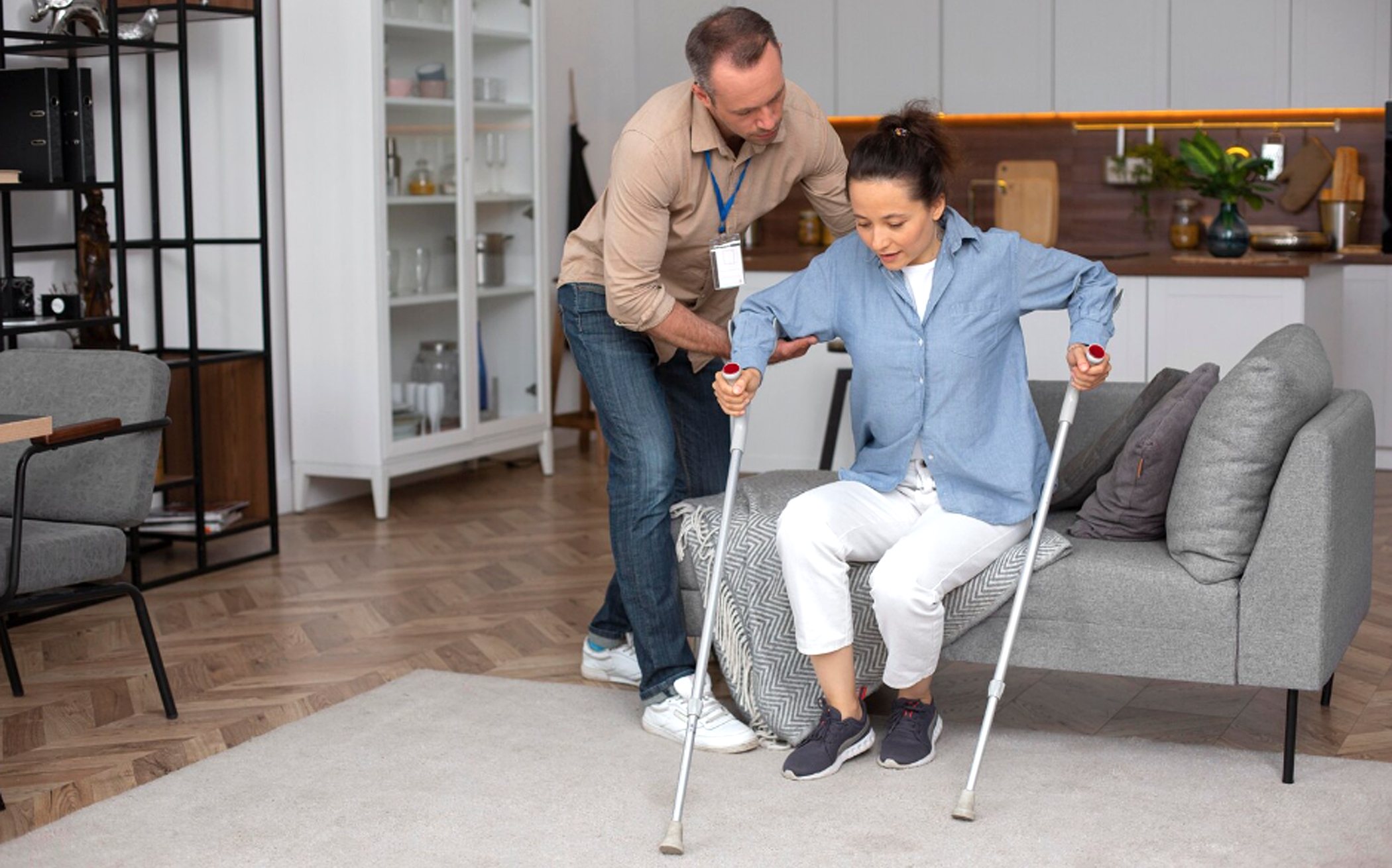
We all strive to have a beautiful, energizing, and uplifting home that welcomes us as we bustle through our day, but when someone you love is returning from the hospital or navigating a temporary disability, beauty must expand to include comfort, accessibility, physical healing, and emotional healing. My husband’s recent return from a hospital stay inspired this article; so I write this for all of us welcoming a loved one home and needing to rethink and tweak things during the healing process.
The good news? A healing home doesn’t have to feel clinical. With thoughtful design, you can create a space that is restorative, nurturing, and visually stunning.
Here’s how.
Start with the Feeling, Not the Furniture
Before rearranging rooms or buying equipment, ask: What would make this person feel safe, calm, and dignified?
Healing spaces should feel:
- Welcoming, not sterile.
- Empowering, not limiting.
- Peaceful, not overwhelming.
Soft textures, natural light, and uncluttered layouts do more for recovery than you might think. Research from institutions like the Mayo Clinic consistently highlights the role of the environment in stress reduction and healing outcomes.
Beauty here isn’t luxury—it’s serenity and nurturing.
Make Accessibility Seamless (and Stylish)
Accessibility features do not have to shout “medical equipment.”
Thoughtful Layout
- Widen walking paths by removing excess furniture.
- Eliminate tripping hazards such as loose accent rugs.
- Create clear sightlines to reduce confusion and stress.
- Relocate frequently used items to waist height.
Elegant Support Features
- Choose grab bars in matte black, brushed brass, or warm bronze finishes.
- Opt for a stylish shower chair, such as a bamboo bench, instead of basic plastic.
- Install lever-style door handles for easier use.
Design-forward brands now create adaptive products that blend beautifully into modern homes. You can find beautiful safety selections in hardware, flooring, furnishings, and accents that do not resemble institutional or clinical décor in any way.
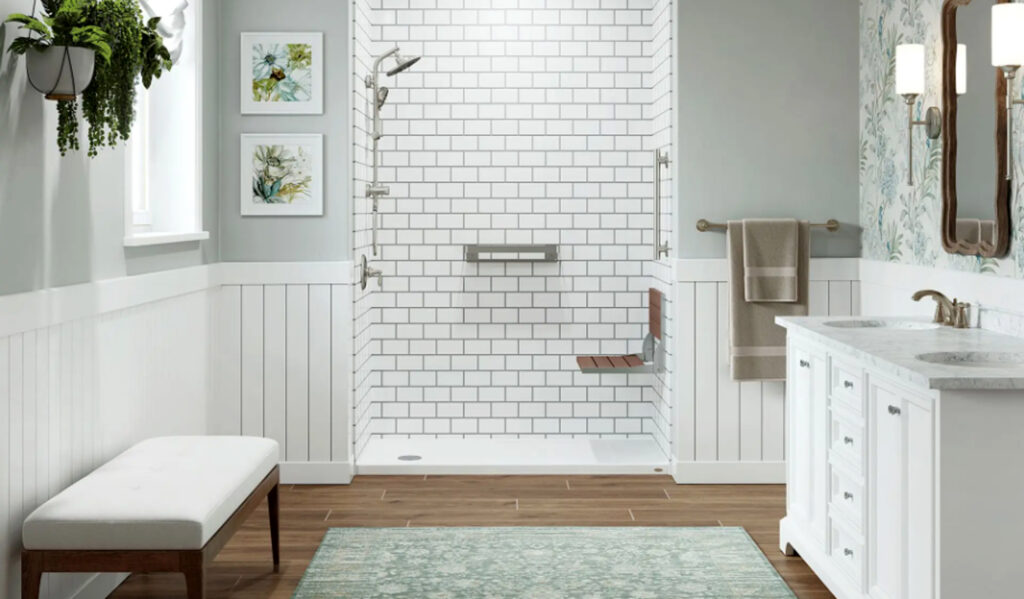
An open floor plan with an open shower makes this space inviting for everyone. Add a stylish grab bar and fold-up wooden bench, bright lighting, and a cheerful plant or two takes function to the next level. (photo credit: bathexperts.com)
Create a Healing Bedroom Sanctuary
The bedroom often becomes the recovery headquarters.
Focus on:
Comfort
- Invest in a supportive mattress or mattress topper, made from eco-friendly/natural materials.
- Layer bedding with breathable natural fabrics, such as cotton or linen, and select soft uplifting colors that invite relaxation and coziness.
- Select adjustable bedside lighting that offers several illumination choices as well as flexibility in position.
Function
- Put the bedside table to work with organizer drawers or use a stylish container for meds, doctor contact info, and/or entertainment items such as books, crossword puzzles, pen and journal, etc.
- Provide easy access to water and tissues. For the best rest, place water lower than the resting head, either on a shelf or in a drawer. Contact me for holistic advice on why this is important.
- Place charging stations within reach. Moving the stations closer to us increases radiation and EMF exposure. When charging, I recommend minimizing EMF exposure by placing phones in airplane mode and/or using a shielded, EMF-blocking cell phone sleeve. Contact me for more insight on EMF/radiation solutions.
Emotional warmth
- Display uplifting personal photographs in the area where the most healing is taking place. If that is the bedroom, do not place photos that stare at the viewer; this causes discomfort and tension, which is not conducive for sleeping and relaxing. Instead, select photos that show people interacting with each other or in the activity of the photo. If possible, include the person who is healing in the photo, reminding them of happier, energetic times.
- Display a few of the uplifting cards or gifts sent from friends. Keep this minimal; don’t overwhelm the space. Remember, less is more.
- Make the space inspiring by hanging meaningful artwork that allows the mind to drift and dream.
If mobility is limited, consider temporarily relocating the bedroom to the main floor. The goal is independence with minimal strain.
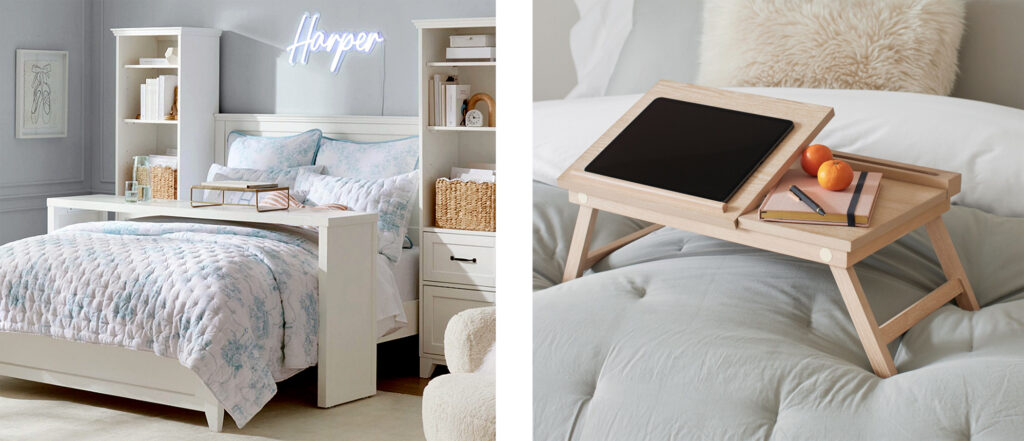
Making things personal and easy to reach in the early stages of healing is empowering. Bed trays, lap desks, and mobile tables can bring charm as well as function to the room. The over-bed rolling desk (left photo) can become a lovely sofa table or entry table after the healing. (photo credit: potterybarn.com)
Design for Emotional Recovery Too
Healing isn’t only physical.
Hospital stays can leave someone feeling vulnerable, disoriented, or even anxious. Gentle sensory elements help regulate emotions, such as:
- calming paint colors, e.g. soft greens, warm neutrals, and muted hues that are accented by an occasional splash of a brighter color for cheer.
- essential oil diffusers, if medically appropriate. Do not diffuse while sleeping; only during waking hours. Contact me for more details on why this is important. Use only 100% pure organic oils, do not use commercial air fresheners, including aerosol or automatic sprays, plug-ins, scented candles, gels, solids, or reed diffusers. These are toxic and cause numerous health issues.
- soft instrumental music.
- access to natural light and outdoor views.
Even small rituals—morning tea by a sunny window, evening reading in a cozy chair—restore a sense of normalcy.

Little gestures can have big impacts on healing both emotionally and phyiscally.
Improve Safety Without Sacrificing Style
Safety is foundational to peace of mind.
Consider:
- Non-slip rugs with attractive colors and patterns.
- A non-slip shower mat that blends with the shower floor and the room’s decor.
- Nightlights with warm glowing tones. Rose quartz nightlights work beautifully.
- Cord management solutions.
- Easy-to-grasp stair railings that are sturdy, yet intentionally designed.
If additional guidance is needed, organizations like VNA Home Health and Hospice Care provide excellent safety checklists that can inspire practical upgrades.
Bring Nature Indoors
Biophilic design (incorporating natural elements into interiors) has measurable benefits for stress reduction.
- Potted plants (low-maintenance varieties like snake plant or pothos). The exception is the bedroom, no live plants in bedrooms; all other areas are excellent. To learn more about living with plants, click here to contact me.
- Natural wood/stone finishes, as well as wood, stone, ceramic, or pottery accents.
- Linen and cotton textiles.
- Views of outdoor greenery
If stepping outside is difficult, create a “window moment” with a comfortable chair positioned for sunlight and fresh air.

Sunlight is nature’s tonic. “Window moments” restore hope and nourish us, inside and out.
Preserve Dignity Through Design
Perhaps the most important element after a hospital stay is dignity.
Avoid:
- Rearranging everything without discussion.
- Making the person feel like a “patient” in their own home.
- Over-medicalizing shared spaces.
Instead:
- Involve them in choices and make it fun, exciting, and refreshing.
- Maintain their personal style.
- Keep shared areas feeling like home, not a recovery ward.
Temporary mobility aids can be stored discreetly when not in use. Beauty and practicality can coexist.
Plan for Flexibility
Recovery is rarely linear. Design your space to adapt by using:
- Modular furniture.
- Lightweight chairs that are easy to move (this makes visits from friends so easy and spontaneous).
- Adjustable lighting.
- Temporary ramps or removable fixtures.
Flexibility reduces stress for everyone in the household, and it makes the person healing feel like they are not an imposition.
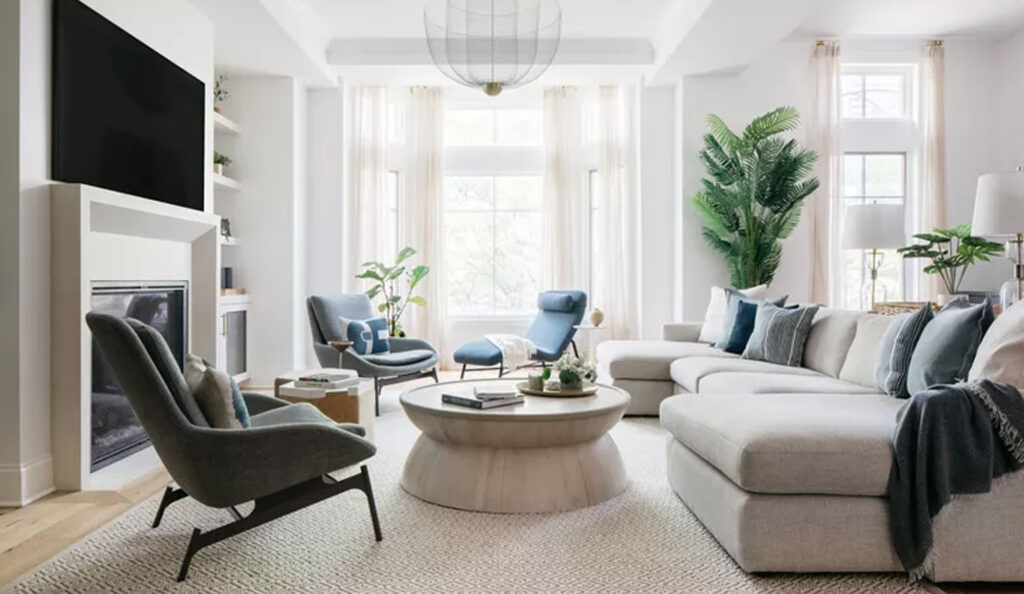
This is a beautiful example of a room designed for everyday life and healing. All the furniture is modular, which provides flexibility as needs change. There is an abundance of uplifting daylight, along with grounding views of the outdoors, which are enhanced by a few strategically placed indoor plants that freshen the interior with natural energy. And, last but not least, there is flexibility in shifting the room’s mood from lively entertainment to a rejuvenating fire, (photo credit: marthastewart.com / Margaret Rajic / Design: Outline Interiors)
Don’t Forget the Caregiver
If you are caring for someone, your environment affects you too.
Create:
- A quiet corner just for you.
- Ample organized storage to reduce chaos.
- Simple systems for medication tracking.
A calm caregiver contributes to a calm patient.
The Heart of a Healing Home
A beautiful home during recovery isn’t about perfection. It’s about intention.
It’s fresh sheets and soft lighting.
It’s removing tripping hazards without removing personality.
It’s creating a space that says, “You are safe here. You are cared for and loved here.”
Educational Resource on Food Effects
Educational Resource on Food Effects
Understanding Sildenafil Half-Life
Understanding Sildenafil Half-Life
Sildenafil Tmax Resource
Sildenafil Tmax Resource
Sildenafil vs vardenafil absorption
Sildenafil vs vardenafil absorption