~ The Redefined Life ~ January 12, 2026
Reflections from a holistic designer…
As we explored in Part 1 (click here) and Part 2 (click here) of this series, the 2026 design trends getting the most attention are those that are bold, expressive, and emotionally charged. These trends are vying for attention, resulting from the many years of cool whites and grays. Even high-gloss finishes, and daring color palettes and patterns are a reaction to the subtle trends of the recent past. Many of these trends are too bold to ignore, and we may find ourselves being inspired with excitement and modernity—but as a holistic designer, I always pause before recommending the latest “hot” trend.
Why? A home isn’t a flashy showroom or staged photograph. It’s an energetic extension of the people who live there.
My role isn’t just to make spaces look good. It’s to also make sure they feel good, support and ground your nervous system, and align with how you actually live. Trends can inspire, but some can be impractical, overwhelming, distracting, or even drain you if they’re adopted without intention.
Holistic design asks a different question than trend reports do. Instead of “What’s the latest fad?” we ask, “What supports your well-being, rhythms, values, and life stage?” And sometimes, the answer is: not the latest trend.
Below are several 2026 interior design trends that may initially look compelling—but might not be right for you.
1. Saturated Color Palettes
Why it’s trending:
Saturated colors are getting a lot of attention—electric blues, digital violets, acidic greens, and high-contrast combinations meant to energize and provoke.
Why it might not be right for you:
Color directly affects the nervous system. While bold hues can feel empowering in short bursts, living inside them daily can create subtle stress that can build-up over time, especially if you’re already managing a fast-paced life, anxiety, burnout, or have sensory sensitivity.
From a holistic lens, the question isn’t “Is this color exciting?” but “How does my body respond to living with it for hours, days, and years?”
If you crave a space to reset, to drift into a restorative sleep, or to find emotional balance, these bold palettes may overwhelm and agitate rather than nurture and inspire.
Holistic alternative:
Use high-energy colors intentionally, such as strategically placed art, tastefully placed accents, or as focal interest in conversational areas, while keeping your foundational palette grounded and breathable.
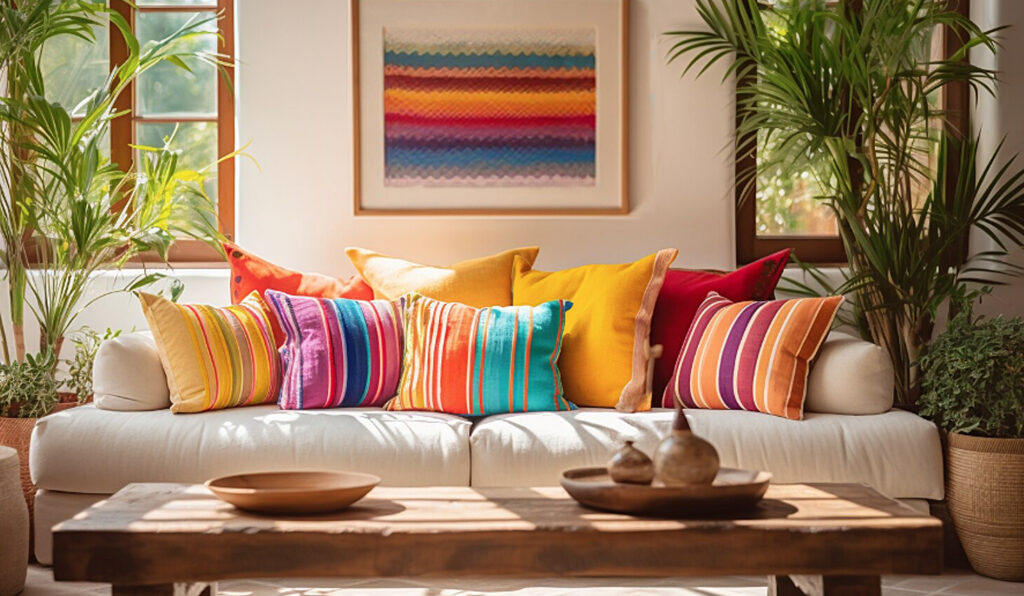
This example could even be taken a step further by painting the center wall a saturated terra cotta color. This would create more energy while anchoring the focal point, as well as making the room warmer and richer.
2. When More Becomes Too Much
Why it’s trending:
Maximalism celebrates abundance—layered décor, collected objects, bold art, and visual richness everywhere you look. For some, this feels joyful, personal, and expressive. For others, it can quietly create mental clutter and become exhausting.
Why it might not be right for you:
Maximalism requires intentional chaos. Without strong editing, it can quickly feel messy rather than meaningful. If you associate home with de-stressing, rest, and mental clarity, this trend may work against you instead of for you.
From a holistic perspective, highly stimulating environments tax the nervous system—especially if you’re already juggling a fast-paced lifestyle. If you crave calm, order, clarity, or struggle with focus, maximalism may feel exciting at first but exhausting over time.
Since Maximalism also requires constant styling, rearranging, and dusting, time needs to be allocated for upkeep. Also, if your space is small or lacks natural light, Maximimalism will make it feel much smaller and more confining than it actually is.
Holistic alternative:
Be intentional—curate meaningful pieces while allowing visual breathing room for the eyes to relax and process the busyness. For instance, bookcases and shelves should have at least 30% empty space. Additionally, select one key focal point and then let the rest of the room calmly support that focal point without competing or overwhelming our senses.

(photo credit: potterybarn.com)
3. Biophilic Décor can be healing, until it’s High-Maintenance
Why it’s trending:
Biophilic design—bringing nature indoors through plants, organic forms, and natural light—is one of the most aligned trends with holistic design principles. That said, it’s not automatically right for everyone.
Why it might not be right for you:
An abundance of living plants requires care, attention, and consistency. Plants need nurturing just as pets, and small children need nurturing. For some, watering, fertilizing, leaf-washing, and trimming is fulfilling and gratifying. For others, it becomes another source of stress or guilt, especially when plants struggle to thrive.
Plants need natural light to thrive. If there is not enough light, do not bring a healthy plant in to grow weak and die, no matter what the latest trend is touting.
Holistic alternative:
It’s better to have a few well-loved elements of nature than a house full of struggling greenery. If there is enough light, use one or two plants to soften a space. If there is not enough natural light, consider other options to introduce nature into the space, such as a vase of fresh flowers, a gentle bubbling fountain, diffusing pure essential oils that evoke nature, or nature-inspired art or textures. NOTE: Fountains and diffusing essential oils can greatly impact a space. If done properly, they can benefit various aspects of your life. If done improperly, it can cause havoc. Click here to contact me for an insightful mentoring session to learn how to implement living elements to your environment.

When bringing plants inside, place them in the proper natural light they need to thrive, while also strategically placing them within the décor of the room. They should add to the overall design not create visual noise. (photo credit: potterybarn.com)
4. Textures: Beautiful but Lifestyle Specific
Why it’s trending:
Textures are dominating 2026. They add dimension and interest to a space. Natural textures (raw wood, stone, clay/pottery, limewashed finishes, etc.) reconnect us to the earth. Cottons, velvets, and chunky woven fabrics soften and warm our souls. Layering textures is another trending fashion because it creates additional levels of interest and warmth, as well as acoustical softness. This “layering” trend is finding its way to layering area rugs; this trend needs special lifestyle consideration before applying it in your home.
Why it might not be right for you:
For those with sensory sensitivities, rough or uneven textures can be uncomfortable rather than calming. A space meant to soothe should never feel abrasive to the touch or visually heavy.
Another consideration is that rustic surfaces are challenging to clean, and rest assured, they will easily collect dust and greasy grime. This is also true with textural fabrics. The oils from our skin and pets’ fur will collect in the lush fibers. Prioritize what is important to you: laundering these items frequently or rethinking the natural textures that will work for you and your family.
As for layered rugs, they are being praised for adding texture, warmth, and a collected aesthetic. However, from a holistic standpoint, too many layers can create visual noise and physical imbalance.
In homes where flow and ease matter—especially for children, elders, the disabled, or highly sensitive individuals—layered rugs can present visual and physical obstacles and even be unsafe.
Natural doesn’t automatically mean nurturing—comfort is personal, and your home should support your personal needs and desires.
Holistic alternative:
To introduce beautiful natural textures without rough impractical surfaces consider artisan made pottery, hand hewn wooden bowls worn smooth by years of use, a single textural area rug that stays grounded, etc, Select tightly woven or soft leather upholstered furniture for easy care and accent with soft throws, soft pillows, a softly curved coffee table, and again, a dazzling area rug could anchor the room.
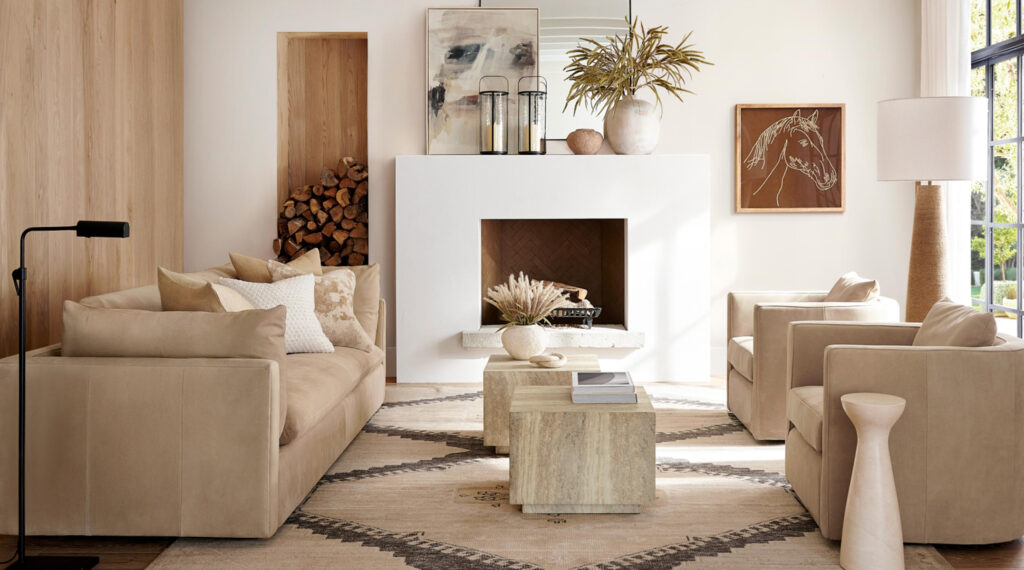
Smooth-grained wood accent walls and smooth stone play nicely with the textured furniture, area rug, and accents. (photo credit: potterybarn.com)
Trends are Ideas, not Rules
As a holistic designer, I believe your home should respond to your energy, lifestyle, and emotional needs, not just what’s trending. Before adopting any design trend, please pause and ask:
- Does this support how I want to feel?
- Does it align with how I actually live?
- Will it still feel good when the trend fades?
- Does is reflect my personality?
- Am I choosing this because it resonates—or because mass media has swayed me?
Design is not about prediction. It’s about presence.
Sildenafil vs Avanafil Insights
Sildenafil vs Avanafil Insights
overview of sildenafil and tadalafil
overview of sildenafil and tadalafil
tadalafil safety information
tadalafil safety information
tadalafil prescription access online
tadalafil prescription access online